CIPD 5CO02 Evidence-based practice
- AC 1.1 Evaluate the concept of evidence-based practice including how approaches to evidence-based practice can be used to provide insight that supports sound decisionmaking across a range of people practices and organisational issues.
- AC 1.2 Evaluate one appropriate analysis tool and one appropriate analysis method that might be applied by organisations to recognise and diagnose issues, challenges, and opportunities.
- AC 1.3 Explain the main principles of critical thinking including how these might apply to your own and others’ ideas to assist objective and rational debate.
- AC 1.4 Explain two decision-making processes for achieving effective outcomes.
- AC 1.5 Assess how two different ethical perspectives can be used to inform and influence moral decision-making.
- AC 3.1 Appraise two different ways organisations measure financial and non-financial performance, providing one example of each.
- AC 3.2 Explain how people’s practices add value in an organisation and identify two methods that might be used to measure the impact of people’s practices.
Evaluate the concept of evidence-based practice including how approaches to evidence-based practice can be used to provide insight that supports sound decisionmaking across a range of people practices and organisational issues. (AC 1.1)
Introduction
Evidence-Based Practice (EBP) is a modern approach to decision-making that integrates the best available research, professional expertise, and stakeholder needs. Within the field of Human Resources (HR), EBP serves as a reliable guide for making informed choices by drawing upon data such as employee performance reports, analytical studies, and industry benchmarks (CIPD, 2023). This method helps HR professionals adopt more consistent and effective strategies, ensuring their actions are grounded in evidence rather than assumptions or habits.
The Rational Decision-Making Model
The rational model involves a systematic series of steps to guide decision-making. It begins by clearly identifying the issue at hand, followed by gathering relevant information, generating potential solutions, assessing each option, and finally choosing the most appropriate course of action (CIPD, 2023).
Strengths
● Encourages structured and logical thinking.
● Prioritizes objectivity by focusing on verifiable data.
● Especially effective for complex, high-impact decisions in HR.
Limitations
● Can be time-consuming due to the need for comprehensive data.
● May not be suitable for dynamic or ambiguous situations.
● Often fails to capture insights drawn from intuitive or experiential knowledge.
Application in HR
This approach is particularly beneficial when addressing multifaceted HR issues, such as designing compensation structures or evaluating the impact of learning and development programs. These decisions often require extensive analysis and thoughtful consideration.
The Bounded Rationality Approach
Bounded rationality acknowledges the real-world constraints that decision-makers face, such as time pressures, limited resources, and imperfect information. Instead of aiming for the “perfect” solution, it focuses on finding an adequate one that meets immediate needs ( Wheeler, 2024).
Strengths
● Adaptable to rapidly changing circumstances.
● Supports quicker decisions, making it ideal for urgent HR matters.
● Utilizes professional judgment and practical experience effectively.
Limitations
● May lead to less-than-ideal outcomes due to gaps in information.
● Decisions can be influenced by bias or assumptions.
● Not ideal for issues requiring deep analysis and precision.
Application in HR
This method is often used for urgent or short-term HR challenges, such as handling sudden resignations, conflict resolution, or addressing immediate employee concerns.
Conclusion
In conclusion, both the rational decision-making model and the bounded rationality approach provide valuable insights for HR professionals. While the rational model excels in structured environments with sufficient data, bounded rationality offers a more flexible alternative in time-sensitive or uncertain situations. By blending elements of both, HR teams can enhance the quality and agility of their decision-making processes.
References
Wheeler, G., 2024. Bounded Rationality. [Online]
Available at: https://plato.stanford.edu/entries/bounded-rationality/
[Accessed 04 April 2025].
CIPD, 2023. Evidence-based HR: Make better decisions and step up your influence. [Online]
Available at: https://www.cipd.org/en/knowledge/guides/evidence-based-profession/
[Accessed 5 April 2025].
Evaluate one appropriate analysis tool and one appropriate analysis method that might be applied by organisations to recognise and diagnose issues, challenges, and opportunities. (ac 1.2)
Introduction
Organizations rely on strategic tools to make informed decisions by examining both external influences and internal dynamics. Two commonly used approaches are PESTLE analysis, which provides a broad overview of external environmental factors, and interviews, which offer qualitative insights from key individuals. Together, these tools can support organizations in understanding the context in which they operate and making more effective strategic choices. This discussion evaluates the effectiveness, strengths, and limitations of both tools.
PESTLE Analysis
PESTLE is a framework that categorizes six external forces: Political, Economic, Social, Technological, Legal, and Environmental that influence organizational operations (CIPD, 2025).
• Political factors include regulations, political stability, and government policies.
• Economic aspects involve inflation, interest rates, and consumer spending patterns.
• Social dimensions explore demographics, lifestyle trends, and societal values.
• Technological factors relate to innovation, automation, and technological change.
• Legal considerations address employment laws, industry standards, and compliance.
• Environmental influences include ecological sustainability and climate concerns.
Advantages
- PESTLE offers a structured way to assess macrolevel trends and threats, helping organizations anticipate shifts and adjust strategies accordingly. It is particularly useful for longterm planning and environmental scanning (CIPD, 2025).
Disadvantages
- The tool’s general nature may result in superficial findings that require further analysis to become actionable. It may also miss sudden changes or specific internal concerns, limiting its usefulness in fastpaced or complex scenarios .
Interviews
Interviews involve direct engagement with individuals such as employees, customers, or partners to gather detailed insights about internal operations and external pressures. This qualitative method is especially helpful in understanding complex or sensitive issues (CIPD, 2024).
Advantages
- They offer deep, personalized insights that can reveal underlying issues or opportunities, often uncovering perspectives that data alone may not reveal.
Disadvantages
- Conducting interviews can be resourceintensive and timeconsuming. The subjective nature of responses also introduces bias, and drawing conclusions from qualitative data can be more challenging than from structured tools.
Conclusion
PESTLE and interviews are both valuable in strategic planning, though they serve different purposes. While PESTLE provides a broad external overview, interviews offer richer, more tailored insights. Organizations can gain a more complete understanding of their environment by integrating both tools, enhancing the quality and relevance of their strategic decisions.
References
CIPD, 2024. Selection methods. [Online]
Available at: https://www.cipd.org/en/knowledge/factsheets/selection-factsheet/
[Accessed 5 April 2025].
CIPD, 2025. PESTLE analysis. [Online]
Available at: https://www.cipd.org/en/knowledge/factsheets/pestle-analysis-factsheet/
[Accessed 5 April 2025].
Contents
- 1 Evaluate the concept of evidence-based practice including how approaches to evidence-based practice can be used to provide insight that supports sound decisionmaking across a range of people practices and organisational issues. (AC 1.1)
- 2 References
- 3 Evaluate one appropriate analysis tool and one appropriate analysis method that might be applied by organisations to recognise and diagnose issues, challenges, and opportunities. (ac 1.2)
- 4 References
Explain the main principles of critical thinking including how these might apply to your own and others’ ideas to assist objective and rational debate. (ac 1.3)
Introduction
Critical thinking is a vital skill in professional and academic settings, enabling individuals to evaluate information thoughtfully and reach informed conclusions. It goes beyond simply accepting ideas at face value and involves questioning assumptions, analyzing evidence, identifying logical connections, and recognizing flawed reasoning ( Birt, 2025). This discussion explores key aspects of critical thinking, highlighting its role in supporting sound judgment and effective decision making.
Analytical and Unbiased Reasoning
Effective critical thinking begins with objective analysis. It emphasizes logic and factual evidence over personal opinion or emotion. For instance, when developing organizational strategies, decisions grounded in data are often more reliable and sustainable than those based on intuition or unverified assumptions.
Developing Persuasive, Evidence Based Arguments
Well-constructed arguments rest on logic, coherence, and supporting evidence. Strong reasoning not only presents clear viewpoints but also incorporates data and considers opposing perspectives (CIPD, 2022). In professional environments, this approach fosters trust and lends credibility to proposals and discussions.
Contextual Awareness and Relevant Comparisons
Critical thinking requires the ability to assess situations within the appropriate context. Drawing conclusions from comparable settings helps avoid misinterpretation. For example, when evaluating management styles, comparing companies with similar organizational cultures or industries ensures the conclusions are applicable and relevant (CIPD, 2022).
Understanding the distinct nature of qualitative and quantitative research is also essential. Treating data from these methods as directly interchangeable can lead to inaccurate or misleading interpretations. Recognizing their unique contributions supports more balanced decision-making.
Promoting Clarity and Distinguishing Between Fact and Opinion
Clear and precise communication reduces the risk of misunderstanding. Defining key terms helps ensure everyone involved shares the same understanding. Additionally, separating objective facts from subjective opinions strengthens evaluations. For example, in performance reviews, distinguishing between measurable outcomes and personal impressions enhances fairness and accuracy (CIPD, 2022)
Awareness of Bias and Misinformation
Critical thinkers remain alert to personal and external biases that may distort their judgment. They also question the validity of information sources and work to identify misinformation or deceptive narratives. In doing so, they protect the integrity of their reasoning and maintain objectivity in decision-making.
Conclusion
Critical thinking supports informed, rational, and fair decisions by emphasizing logic, context, and clarity. By recognizing bias, using evidence effectively, and ensuring communication is clear, individuals can navigate complex issues with greater confidence and accuracy, leading to more successful outcomes.
References
Birt, J., 2025. 6 Main Types of Critical Thinking Skills (With Examples). [Online]
Available at: https://www.indeed.com/career-advice/career-development/critical-thinking-examples
[Accessed 5 April 2025].
CIPD, 2022. CPD tips – How to develop critical thinking skills. [Online]
Available at: https://www.cpduk.co.uk/news/how-to-develop-critical-thinking-skills
[Accessed 5 April 2025].
Explain two decision-making processes for achieving effective outcomes. (ac 1.4)
Introduction
Organizations must continuously make choices that align with their goals, respond to current challenges, and anticipate future developments. Two commonly adopted approaches to strategic decision-making are the tailored method and the forward-looking approach. Each offers distinct benefits and is best suited to different circumstances. While the tailored method focuses on responding to immediate needs within a specific context, the forward-looking approach emphasizes preparing for future possibilities to maintain long-term success.
Tailored Decision-Making Method
The tailored decision-making approach centers on creating solutions that fit the unique characteristics of an organization (CIPD, 2024). Instead of following standardized models, this method values flexibility and a deep understanding of context.
Analyzing the Environment:
The first step involves a comprehensive review of internal and external factors, including company culture, available resources, market conditions, and stakeholder expectations. For instance, an HR strategy tailored to a company’s needs may blend internal values with labor market trends to shape recruitment and compensation.
Assessing Strategic Options:
After analyzing the environment, possible actions are evaluated in light of organizational objectives (Dieffenbacher, 2023). This requires weighing short-term gains against long-term sustainability. For example, when considering remote work, decision-makers must assess employee roles, productivity expectations, and infrastructure readiness, rather than relying on general trends.
Customized Implementation:
Finally, the chosen strategy is implemented with necessary adjustments to align with organizational demands. This ensures that actions are not only effective but also practical and sustainable within the existing structure.
Forward-Looking Decision-Making Method
This approach focuses on anticipating future developments and aligning current actions with long-term goals . It emphasizes risk management and proactive planning (Dieffenbacher, 2023).
Exploring Future Scenarios:
The process begins with envisioning different future conditions—such as technological changes, market shifts, or evolving regulations. This helps organizations prepare for uncertainty and identify emerging opportunities.
Backward Planning:
Also known as reverse planning, this technique starts with a future goal and works backward to determine the necessary steps to reach it. A firm aiming for market leadership might start investing now in skills and technologies that will be essential later.
Adaptation and Flexibility:
Forward-looking decisions require regular reassessment to remain aligned with a changing environment. This adaptability helps organizations stay resilient and competitive.
Conclusion
Both decision-making approaches serve important purposes. The tailored method addresses present needs with precision, while the forward-looking strategy ensures preparedness for the future. Combining both approaches can empower organizations to make well-rounded, strategic choices.
References
CIPD, 2024. Situational decision-making. [Online]
Available at: https://www.cipd.org/en/the-people-profession/the-profession-map/explore-the-profession-map/core-behaviours/situational-decision-making/
[Accessed 5 April 2025].
Dieffenbacher, S. F., 2023. Strategic Options Techniques, Tips, and Tools for Business Success. [Online]
Available at: https://digitalleadership.com/blog/strategic-options/
[Accessed 5 April 2025].
Assess how two different ethical perspectives can be used to inform and influence moral decision-making. (AC 1.5)
Introduction
When organizations or individuals face ethical dilemmas, philosophical frameworks such as utilitarianism and deontology offer valuable guidance. Each perspective provides distinct insights into what constitutes morally sound behavior. Utilitarianism emphasizes the consequences of actions and seeks to promote the greatest overall benefit, while deontology focuses on moral principles and duties, regardless of the outcomes. Understanding these theories can help professionals navigate complex decisions with clarity and integrity.
Utilitarian Perspective: Focusing on the Greater Good
Utilitarianism, championed by thinkers like Jeremy Bentham and John Stuart Mill, proposes that the ethical value of an action is determined by its contribution to overall happiness or the reduction of harm This results-oriented theory is particularly influential in policy-making and business, where the aim is often to benefit the majority.
Consequential Focus:
As a teleological approach, utilitarianism evaluates decisions based on the results they produce. For example, in a company facing financial difficulty, shutting down one division to secure the organization’s survival may be justified if it protects more jobs in the long run.
Balancing Pros and Cons:
Decision-makers using this framework weigh the benefits and drawbacks of each option (Widarni & Bawono, 2021). In healthcare, this could involve prioritizing treatments that serve the most patients or offer higher success rates. However, this model can be problematic when outcomes are subjective or difficult to measure across diverse populations.
Criticism of Utilitarianism:
Despite its practical appeal, utilitarianism is often criticized for potentially overlooking the rights of the minority. Decisions that benefit the majority may sometimes violate ethical principles like justice or equality, raising questions about fairness.
Deontological Perspective: Guided by Moral Duties
Deontology, rooted in the philosophy of Immanuel Kant, takes a rules-based approach to ethics. It asserts that actions are inherently right or wrong based on moral obligations, not results (Yorks et al., 2022).
Principle-Based Ethics:
Deontologists follow universal moral rules. For instance, a business committed to honesty may avoid misleading stakeholders, even if deception would result in profit.
Respecting Rights:
A central tenet is treating individuals as ends in themselves, not merely as tools to achieve broader goals (Waite et al., 2021). Upholding contracts and respecting employee dignity are typical examples of this philosophy in action.
Limitations of Deontology:
Its rigid nature can pose challenges when duties conflict. For example, telling the truth may cause harm in some situations, yet deontology offers little flexibility for such dilemmas.
Conclusion
Both utilitarianism and deontology offer valuable, though contrasting, lenses for evaluating ethical decisions. While utilitarianism promotes collective benefit through outcome analysis, deontology stresses the importance of moral principles and individual rights. An informed balance of both frameworks can guide ethical behavior in complex professional environments.
References
Widarni, E.L. and Bawono, S. (2021). The Basic Of Human Resource Management Book 3. BookRix.
Yorks, L., Abel, A.L. and Rotatori, D. (2022). Strategic human resource development in practice : leveraging talent for sustained performance in the digital age of AI. Cham, Switzerland: Springer.
Appraise two different ways organisations measure financial and non-financial performance, providing one example of each. (AC 3.1)
Introduction
Evaluating an organization’s financial performance is essential for understanding its viability, profitability, and strategic direction. Financial metrics such as gross profit, net profit, and return on investment (ROI) are commonly used to assess how well a business generates income and manages costs. Additionally, non-financial indicators like customer satisfaction offer a more comprehensive view of performance beyond just numbers.
Gross Profit: Measuring Core Profitability
Gross profit represents the income a company retains after deducting the direct costs of production from its total revenue (Nelton, 2021). These costs include materials and labor directly involved in delivering goods or services. This metric is vital for understanding how efficiently an organization transforms its resources into revenue.
For example, if a retail company records $500,000 in total sales and incurs $300,000 in production costs, the resulting gross profit is $200,000. This figure indicates whether the business generates sufficient margin to fund other operational activities such as advertising, staffing, and logistics. A healthy gross profit margin can also enable competitive pricing or investment in innovation.
Net Profit: A Holistic View of Profitability
Net profit offers a broader perspective by incorporating all operating expenses, taxes, interest payments, and other financial obligations (McCartney & Fu, 2022). It is often viewed as a key indicator of a company’s overall financial health and long-term sustainability.
Continuing with the retail example, if total overhead costs amount to $150,000, the business would post a net profit of $50,000. This bottom-line figure reflects the company’s true profitability and its capacity to generate shareholder value, reinvest in growth, or manage debts.
Customer Satisfaction: A Vital Non-Financial Metric
Beyond financial performance, customer satisfaction serves as an essential indicator of business success. This measure evaluates how well a company fulfills or exceeds customer expectations, contributing to client loyalty, brand strength, and potential for future growth (McCartney & Fu, 2022). High satisfaction levels can signal consistent quality and service, particularly in service-driven sectors. However, such feedback can be subjective, making it harder to benchmark across industries or time periods.
Conclusion
In conclusion, assessing financial performance involves more than just analyzing profits. While gross and net profit provide critical insights into revenue and cost management, incorporating non-financial indicators like customer satisfaction presents a fuller picture of organizational performance. Together, these metrics enable businesses to make informed decisions that support both short-term gains and long-term success.
References
Nelton, P. (2021). Employee Management. Independently Published.
McCartney, S. and Fu, N., 2022. Bridging the gap: why, how and when HR analytics can impact organizational performance. Management Decision, 60(13), pp.25-47.
Explain how people’s practices add value in an organisation and identify two methods that might be used to measure the impact of people’s practices. (AC 3.2)
In modern organizations, people practices refer to the strategies, procedures, and initiatives directed at managing employees to maximize their potential and contribution to business success. These practices encompass key areas such as talent development, employee engagement, well-being, and performance management. By fostering a supportive and productive work environment, people practices can significantly enhance workforce motivation, competence, and retention, all of which are vital to achieving organizational goals (Tenney, 2024).
Advantages of Strong People Practices
1. Enhanced Employee Engagement and Interaction
Employee recognition, training opportunities, and reward systems are instrumental in promoting staff involvement and alignment with company goals. An engaged workforce tends to be more productive, loyal, and proactive. This, in turn, reduces turnover rates and leads to improved customer service and overall organizational efficiency.
2. Positive Organizational Culture
Robust people practices play a crucial role in shaping and sustaining a healthy organizational culture. Initiatives that promote diversity, inclusion, ethical behavior, and collaborative work environments foster creativity and team cohesion (CIPD, 2024). When employees feel respected and supported, they are more likely to contribute positively to workplace innovation and morale.
3. Alignment with Strategic Objectives
Well-planned people management ensures that employee efforts align with the broader business strategy. Leadership development, succession planning, and workforce management are tools that prepare employees to take on strategic roles, ensuring long-term growth and adaptability in a competitive market. These practices ensure the right people are in place to drive key organizational priorities forward (Indeed, 2025).
Evaluating the Impact of People Practices
To determine the effectiveness of people-related investments, organizations employ various evaluation techniques.
Cost-Benefit Analysis
This method assesses the financial value of people practices by comparing the costs of initiatives—such as training programs or well-being campaigns—against measurable outcomes like productivity gains, improved morale, and reduced attrition (CIPD, 2024).
Return on Equity (ROE)
ROE gauges how effectively people-related investments enhance profitability in relation to shareholder equity . For instance, a successful leadership development initiative might lead to improved business outcomes, sounder decision-making, and long-term sustainability, signaling a strong return on investment.
Conclusion
In summary, people practices are essential drivers of business performance. By fostering employee engagement, nurturing a positive workplace culture, and aligning talent with strategic goals, organizations can enhance both employee satisfaction and operational success. Measuring these outcomes ensures continued growth and informed decision-making regarding human capital investments.
References
CIPD, 2024. Why work in the people profession?. [Online]
Available at: https://www.cipd.org/en/the-people-profession/careers/why-work/
[Accessed 5 April 2025].
Indeed, 2025. https://www.cipd.org/en/the-people-profession/careers/why-work/. [Online]
Available at: https://ca.indeed.com/career-advice/career-development/benefits-of-managing-people
[Accessed 5 April 2025].
Tenney, M., 2024. Employee Motivation and Its Impact on Productivity. [Online]
Available at: https://peoplethriver.com/employee-motivation-and-its-impact-on-productivity/
[Accessed 5 April 2025].
Task Two: Quantitative Analysis
1.) Percentage for Performance Review Judgements
a.) Total Employees per Department
.) Total Employees per Department
| Departments | Total Employees |
| Administration Department | 11 |
| Sales Department | 13 |
| Logistics Department | 20 |
| Research and Development | 10 |
b.) Employees in each Judgement Category per Department
1st Qtr
| Administration | Sales | Logistics | R &D | |
| Outstanding | 2 | 0 | 4 | 3 |
| Mets set Individual KPIs | 2 | 13 | 8 | 3 |
| Not quite there yet | 3 | 0 | 6 | 1 |
| Under performing | 3 | 0 | 2 | 3 |
| (Absent) | 1 | 0 | 0 | 0 |
| Total Employees | 11 | 13 | 20 | 10 |
2nd Qtr
| Administration | Sales | Logistics | Research & Dev. | |
| Outstanding | 1 | 0 | 5 | 5 |
| Mets set Individual KPIs | 4 | 13 | 9 | 3 |
| Not quite there yet | 4 | 0 | 4 | 1 |
| Under performing | 1 | 0 | 0 | 0 |
| (Absent) | 1 | 0 | 2 | 1 |
| Total Employees | 11 | 13 | 20 | 10 |
1st Qtr
| Administration | Sales | Logistics | R &D | |
| Outstanding | 2 | 0 | 4 | 3 |
| Mets set Individual KPIs | 2 | 13 | 8 | 3 |
| Not quite there yet | 3 | 0 | 6 | 1 |
| Under performing | 3 | 0 | 2 | 3 |
| (Absent) | 1 | 0 | 0 | 0 |
| Total Employees | 11 | 13 | 20 | 10 |
2nd Qtr
| Administration | Sales | Logistics | Research & Dev. | |
| Outstanding | 1 | 0 | 5 | 5 |
| Mets set Individual KPIs | 4 | 13 | 9 | 3 |
| Not quite there yet | 4 | 0 | 4 | 1 |
| Under performing | 1 | 0 | 0 | 0 |
| (Absent) | 1 | 0 | 2 | 1 |
| Total Employees | 11 | 13 | 20 | 10 |
Second Quarter
| Administration | Sales | Logistics | R & D | |
| Outstanding | 9% | 0% | 25% | 50% |
| Mets set Individual KPIs | 36% | 100% | 45% | 30% |
| Not quite there yet | 36% | 0% | 20% | 10% |
| Under performing | 9% | 0% | 0% | 0% |
| (Absent) | 9% | 0% | 10% | 10% |
| Total Employees | 100% | 100% | 100% | 100% |
2. Bonus Due
| Team | Employee Name | First Quarter Bonus (%) | First Quarter Bonus Due | Second Quarter Bonus (%) | SecondQuarter Bonus Due | Total Departmental Bonus |
| Administration Department | Robin Bird | 0.04 | 1260 | 0 | 0 | |
| Saffron Finch | 0.04 | 960 | 0.04 | 960 | ||
| 3180 | ||||||
| Sales Department | ||||||
| 0 | ||||||
| Logistics Department | ||||||
| Ruth Sixsmith | 0 | 0 | 0.04 | 950 | ||
| Wendy Boot | 0 | 0 | 0.04 | 950 | ||
| Sally Rigbye | 0.04 | 950 | 0 | 0 | ||
| Jean Livesey | 0 | 0 | 0.04 | 1040 | ||
| Julie Chisnall | 0.04 | 780 | 0.04 | 780 | ||
| Rick Lovall | 0.04 | 780 | 0 | 0 | ||
| Gill Jamieson | 0.04 | 780 | 0.04 | 780 | ||
| Jamie Penny | 0 | 0 | 0 | 0 | 7790 | |
| Research and Development | Ethan Brar | 0.04 | 1300 | 0.04 | 1300 | |
| Harrison Briggs | 0 | 0 | 0.04 | 1300 | ||
| Steve Owens | 0 | 0 | 0.04 | 1180 | ||
| Tasha Graham | 0.04 | 1180 | 0.04 | 1180 | ||
| Jennifer Frost | 0.04 | 1180 | 0.04 | 1180 | 9800 |
Table Two
2. Feedback (Percentage)
Feedback from Line Managers
| Feedback from Line Managers | Strongly Agree | Agree | Disagree | Strongly Disagree | Total Line Managers |
| I’m given time to prepare to for employee appraisals | 6% | 58% | 22% | 14% | 100% |
| I feel confident in carrying out a performance appraisal | 8% | 44% | 46% | 2% | 100% |
| I have no concerns when applying ratings when conducting appraisals | 14% | 68% | 18% | 0% | 100% |
| I’m confident that I’m able to assess employees performance fairly | 6% | 52% | 22% | 20% | 100% |
| I have had training to enable me to undertake appraisals | 0% | 0% | 88% | 12% | 100% |
| I have no issue in challenging underperforming employees | 0% | 18% | 74% | 8% | 100% |
| I’m good at providing feedback and agree set performance targets | 24% | 8% | 30% | 38% | 100% |
Feedback from Employees
| Feedback from Employees | Strongly Agree | Agree | Disagree | Strongly Disagree | Total Employees |
| My line manager provides clear and direct guidance | 1% | 47% | 51% | 1% | 100% |
| During my reviews my line manager listens to the ideas I put forward | 2% | 16% | 80% | 2% | 100% |
| My line manager provides positive feedback | 3% | 60% | 35% | 2% | 100% |
| My line manager possesses good people management skills | 6% | 42% | 38% | 14% | 100% |
| My line manager has time to listen to me | 36% | 34% | 6% | 24% | 100% |
| My line manager provides a balanced response when conducting my reviews | 0% | 61% | 39% | 0% | 100% |
| My line manager provides me with constructive feedback | 29% | 28% | 24% | 19% | 100% |
| My line manager provides me with learning and development opportunities so I can do my job better | 23% | 43% | 30% | 4% | 100% |
AC 2.2
1. Performance Reviews per Department (%)
1st Quarter
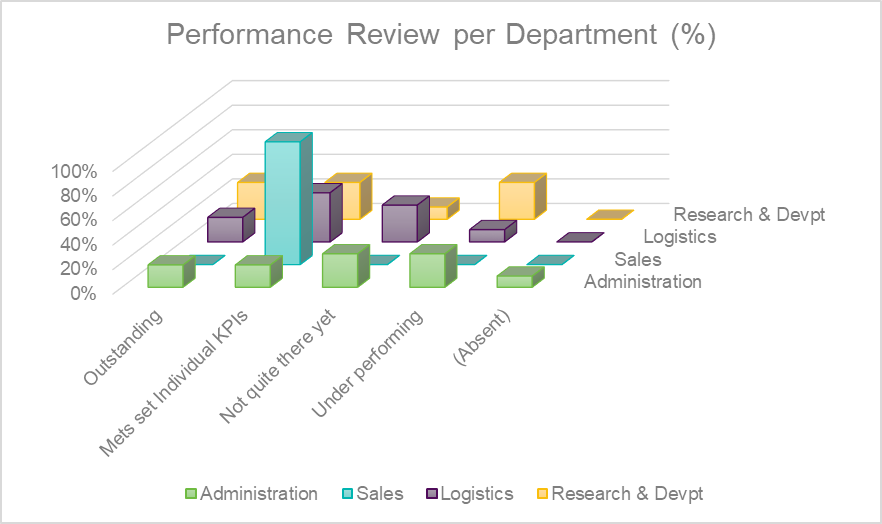
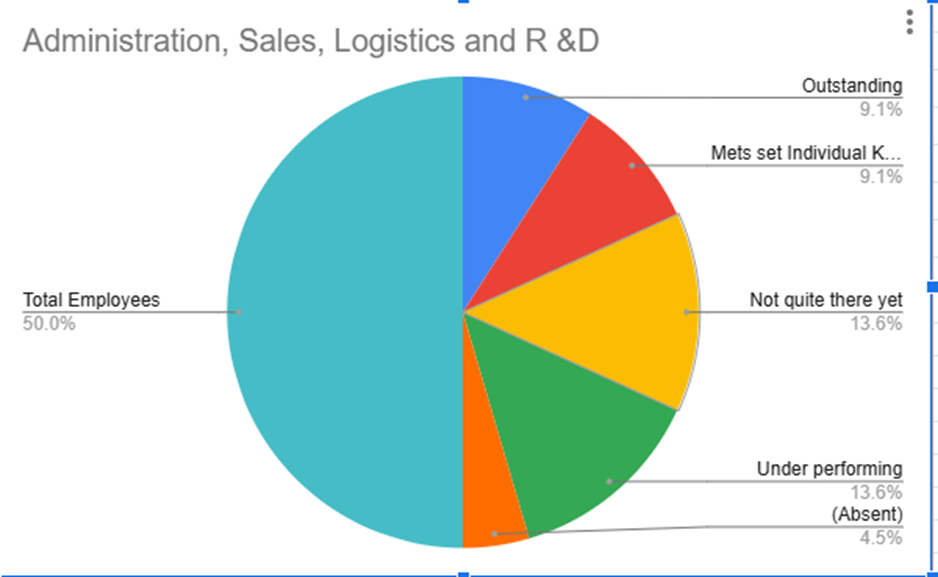
Of the four departments, the research and development team has demonstrated the most exceptional level of achievement. All individuals within the sales team achieved their personal performance goals. However, some departments still include employees whose performance does not yet meet the expected standards.
2nd Quarter
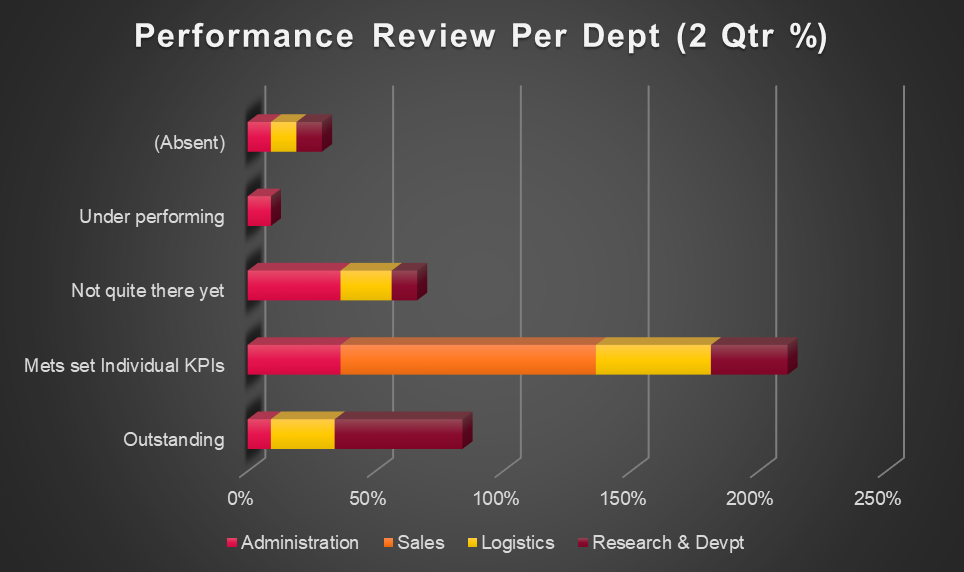
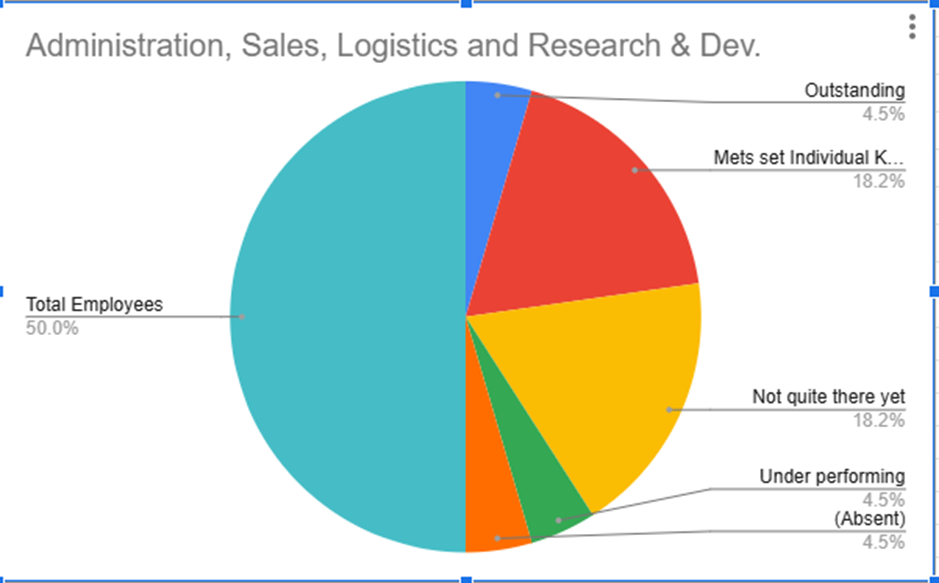
During the second quarter, every employee in the sales department not only met but exceeded their individual KPIs. In contrast, the administrative department reported a significant number of staff members falling short of the expected performance standards.
Table Two
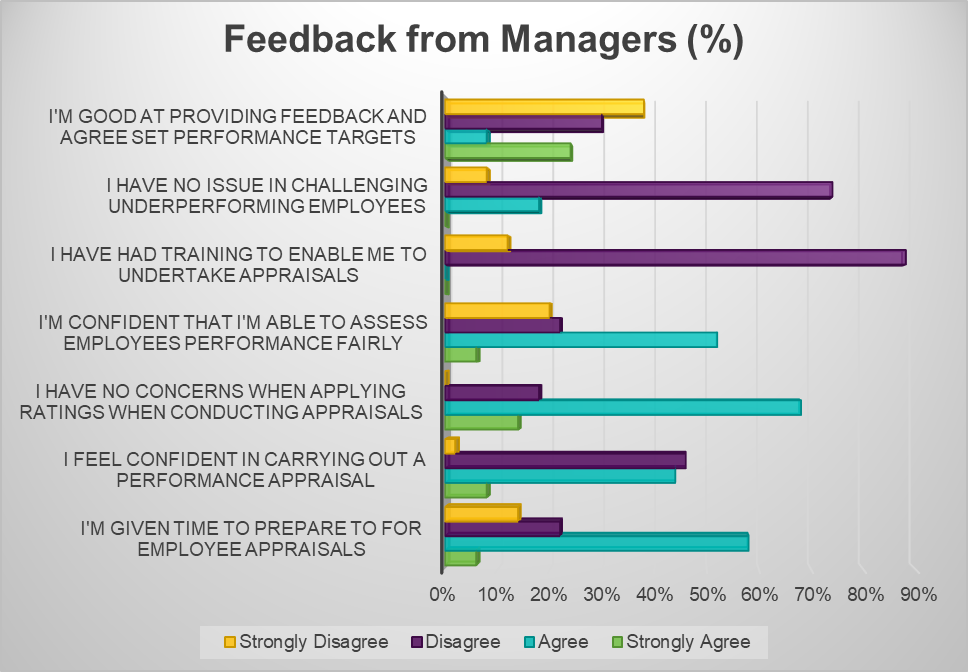
The majority of line managers showed minimal concern about implementing a multi-rater evaluation system, indicating confidence in the organization’s performance management approach. However, many also highlighted a lack of adequate guidance to effectively carry out these evaluations.
Feedback from Employees
Most line managers expressed no concerns about using multi-rater systems for evaluations, indicating robust performance management practices within the company. However, several pointed out that they had not received sufficient support to carry out these reviews effectively.
AC 2.3
Recommendations
Table One: Performance Review Judgments
Advantages
Introduction
Performance management is a crucial aspect of organizational success, enabling companies to identify strengths, address weaknesses, and enhance overall productivity. To further improve the effectiveness of performance management, companies can invest in focused training initiatives for employees, particularly those struggling to meet Key Performance Indicators (KPIs). By addressing performance gaps and fostering skill development, these programs can help teams, especially in areas like research and development and administration, meet and exceed expectations. However, there are several factors to consider, including potential drawbacks, cost implications, and how to support employees through the process.
Benefits of Focused Performance Management Training
Implementing targeted performance management training can provide employees with a deeper understanding of their KPIs, ultimately improving their ability to meet and surpass them. This initiative is particularly beneficial for teams with performance gaps, such as research and development and administration. By fostering a culture of accountability, employees will not only understand the importance of their individual contributions but will also gain the necessary skills to perform more effectively. Over time, this investment in training will lead to a significant boost in overall performance and higher success rates in meeting KPIs.
Potential Drawbacks
While the benefits of performance management training are substantial, the implementation of such initiatives may come with temporary downsides. During the training period, employees may not be as available for their regular tasks, which could result in a short-term dip in productivity. It is important for the company to manage expectations and plan accordingly to minimize any disruptions to day-to-day operations.
Cost Considerations
In addition to training programs, companies can implement mentoring initiatives to further support employees who are struggling to meet their KPIs. Pairing these employees with high-performing mentors can provide guidance and share effective strategies, helping them improve their performance. However, such mentoring programs come with additional costs, as well as time commitments from both mentors and mentees. These expenses must be carefully weighed against the potential benefits to ensure a positive return on investment.
Feedback and Assessment Insights
Gathering structured feedback from both line managers and employees can lead to a more supportive and cooperative workplace environment. This feedback can enhance the performance review process, boosting employee morale and improving managerial efficiency. However, line managers will need proper training in assessment methods and active listening to make evaluations more effective. Training programs for line managers may also carry significant costs and could temporarily reduce productivity.
Conclusion
Investing in performance management training and structured feedback programs has the potential to significantly enhance employee performance and support overall organizational growth. However, companies must carefully balance the benefits with potential drawbacks, such as reduced productivity during training periods and the financial commitment required. By strategically planning these initiatives and considering both the short-term and long-term impact, organizations can create an environment that nurtures employee development and achieves greater success in meeting performance goals.
Contents
- 1 Explain the main principles of critical thinking including how these might apply to your own and others’ ideas to assist objective and rational debate. (ac 1.3)
- 2 References
- 3 Explain two decision-making processes for achieving effective outcomes. (ac 1.4)
- 4 Assess how two different ethical perspectives can be used to inform and influence moral decision-making. (AC 1.5)
- 5 References
- 6 Appraise two different ways organisations measure financial and non-financial performance, providing one example of each. (AC 3.1)
- 7 References
- 8 Explain how people’s practices add value in an organisation and identify two methods that might be used to measure the impact of people’s practices. (AC 3.2)
- 9 References
Download the Full 5CO02 Example
Get instant access to the complete assignment by unlocking below.
References
Chión, S.J., Charles, V. & Morales, J., 2020. The impact of organisational culture, organisational structure, and technological infrastructure on process improvement through knowledge sharing. Business Process Management Journal, 26(6), pp.1443–1472.
Islam, T., Islam, R., Pitafi, A.H., Xiaobei, L., Rehmani, M., Irfan, M. & Mubarak, M.S., 2021. The impact of corporate social responsibility on customer loyalty. Sustainable Production and Consumption, 25, pp.123–135.
Laig, R.B.D. & Abocejo, F.T., 2021. Change management process in a mining company. Journal of Business and Management Studies, 3(1), pp.118–133.
Nudurupati, S.S., Garengo, P. & Bititci, U.S., 2021. Impact of the changing business environment on performance measurement and management practices. International Journal of Production Economics, 232, p.107942.
+ 16 more references included in the full download.